


Nobody underestimates the lifting involved in a move. What people underestimate, almost every time, is the packing. A typical three bedroom home fills 60 to 100 boxes, every one of them takes longer to pack well than you expect, and the last families to learn this are the ones stuffing trash bags at midnight before the truck arrives.
The fix is not packing faster. It is starting earlier. Here is the six week timeline we walk Winchester families through, paced so the work never swallows a whole weekend and nothing precious ends up wrapped in a bath towel at the last minute.
When should you start packing for a move?
Start packing six weeks before moving day for a typical three bedroom home, and at least four weeks out for an apartment. Begin with storage areas and out of season items, aim for two or three boxes a day instead of marathon weekends, and save daily essentials for the final week.
The pace is the whole trick. Three boxes a day feels almost lazy, yet it quietly produces well over a hundred packed boxes by moving day without a single exhausting session. Short sessions also keep your labeling sharp, and sharp labeling is what makes unpacking at the new house feel organized instead of archaeological.

Week six: build your supply stash and your system
Gather more boxes than you think you need: small boxes for books and anything heavy, medium boxes for most of the house, and large boxes only for light, bulky items like bedding and lampshades. Add two rolls of quality packing tape per person, a bundle of packing paper, and a marker that lives in your pocket for the next six weeks. Free boxes from liquor stores and local Facebook groups work fine as long as they are clean, dry, and sturdy enough to stack.
Then set the system before the first box closes. Label every box on the top and one side with its destination room and a few words about the contents. Number each box and keep a running list on your phone. Those five extra seconds per box will save you an hour of hunting for the coffee maker on the other end.
Weeks five and four: pack the rooms you will not miss
Start where daily life is not happening: the attic, the basement, the garage shelves, the guest room, and the storage closets. Holiday decorations, keepsakes, photo albums, books, and the good china can all go into boxes now, because none of it will be needed before moving day. In a Winchester August, that also means every parka, snow boot, and space heater in the house packs early.
These weeks are also the natural moment to lighten the load. Every shelf you empty will hand you something you forgot you owned, and each item you donate or sell now is a box you never buy, pack, carry, or unpack. Sort as you go and the decluttering happens almost for free, without ever feeling like its own project.
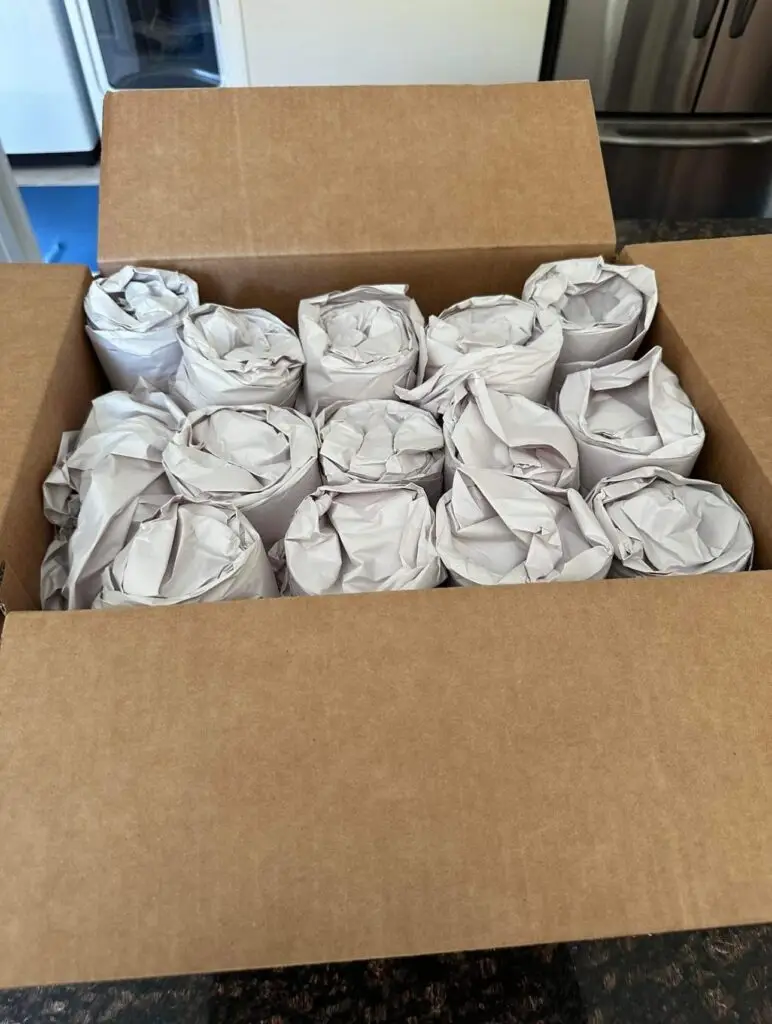
Weeks three and two: work toward the center of the house
Shift to the things you use monthly but not daily. The stand mixer, the serving platters, and the small appliances you can live without for a while. Extra towels and linens, keeping two sets per person in rotation. Off season clothes, most of the bookshelves, the wall art, and the home office, with important documents pulled into one folder that will ride in your car. Bag the screws and hangers from anything that comes off a wall and tape the bag to the item it belongs to.
Photograph the cords behind the TV and other electronics before you box them, and keep each cable set bagged with its device. By the end of week two the house should look sparse but still function normally. If it still looks fully lived in, double the daily box count and recruit help.
Week one: essentials only, everything else sealed
The final week belongs to daily life. Switch to paper plates, pack the everyday dishes, and shrink the kitchen down to a coffee maker and one pan. Pack all remaining clothes except a few outfits per person, gather cleaning supplies into a single caddy for the final wipe down, and close out each room completely so nothing needs a decision while the crew is on the clock.
Build an essentials box for every family member: medications, chargers, toiletries, documents, a towel, bed sheets, and whatever else the first night demands. Those boxes travel in your car, never on the truck. For the room by room details of the last 48 hours, our moving day prep checklist picks up right where this timeline ends.
Bottom Line
Good packing is boring on purpose: six weeks of lead time, a few boxes a day, storage rooms first, essentials last, and labels on everything. Follow the timeline and moving week becomes the easy part of the whole process. And if the calendar has already eaten your six weeks, Patton’s Moving & Storage offers full packing services across Winchester and Frederick County, and our crews can pack an entire home in a day with every label done right.